Let us do the math. The math is honest. It does not exaggerate. It does not promise riches. A self-loading concrete mixer costs $35,000. That includes shipping, clearing, and delivery to a Nigerian site. That is real money. The question is real too. How long until that self loading concrete mixer machine pays for itself? The answer depends on your production, your pricing, and your costs. This article argues that a realistic payback period is six to twelve months. It could be faster. It could be slower. The difference is discipline. The creative argument is that the machine does not earn money. You earn money. The machine is a tool. A good tool. Use it well, and it returns your investment quickly. Use it poorly, and it sits idle. Let us break down the numbers.
Revenue Per Hour: What Can You Charge?
Rental Rates in Nigeria
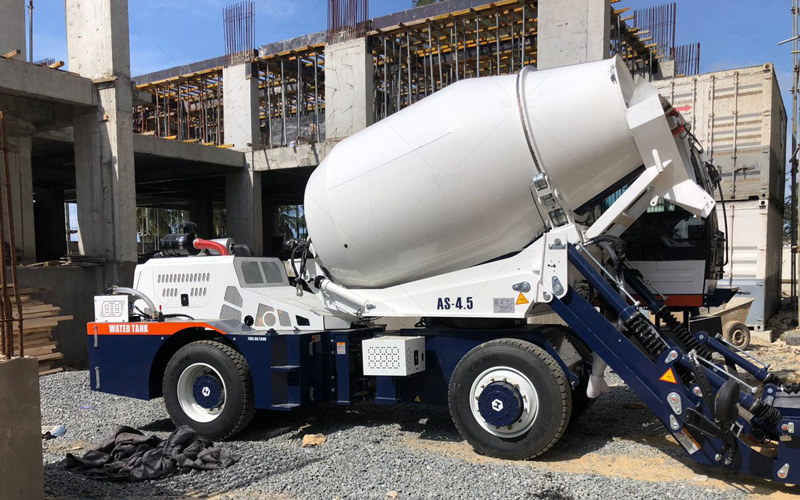
A self loading concrete mixer for sale in Nigeria can be rented. Contractors who do not own one often rent. The daily rental rate in Lagos, Abuja, or Port Harcourt is ₦50,000 to ₦80,000. That is $65 to $105 at current exchange rates. The rate includes the machine and an operator. It does not include fuel. The creative observation is that rental rates are sticky. They do not change quickly. A contractor who rents a machine for 20 days per month earns ₦1 million to ₦1.6 million. That is $1,300 to $2,100. At that rate, the $35,000 machine pays for itself in 17 to 27 months. That is the rental model. It is safe. It is slow.
Owning and Selling Concrete
The faster path is owning the machine and selling concrete. You buy aggregates and cement. You produce concrete. You sell it to developers, builders, and homeowners. The margin is higher. A cubic meter of concrete sells for ₦45,000 to ₦65,000. The material cost is ₦25,000 to ₦35,000. The margin is ₦10,000 to ₦30,000 per cubic meter. A self-loading mixer produces 2 to 4 cubic meters per hour. Let us use 3 cubic meters as an average. That is ₦30,000 to ₦90,000 margin per hour. The creative argument is that the selling model is more profitable. It also requires more work. You need customers. You need a stockpile of materials. You need a truck to deliver. The rental model is passive. The selling model is active. Choose your path.
The Break-Even Calculation
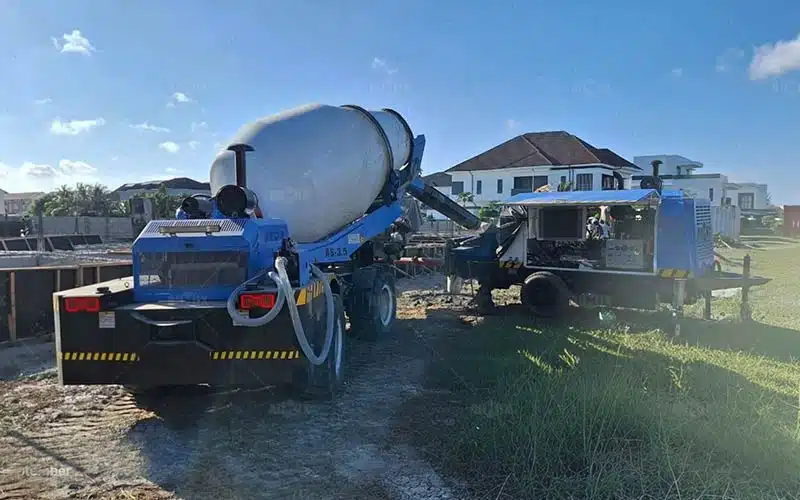
Combine both models. Rent the machine for 10 days per month. Use it for your own concrete sales for 10 days. Rental income: 10 days at ₦65,000 = ₦650,000. Concrete sales: 10 days at 6 hours per day at 3 cubic meters per hour = 180 cubic meters. Margin of ₦20,000 per cubic meter = ₦3.6 million. Total monthly income: ₦4.25 million. That is $5,500. The $35,000 concrete mixer machine pays for itself in 6.4 months. The creative observation is that this is realistic. It is not a fantasy. It requires work. It requires finding customers. It requires managing materials. It is achievable.
Costs That Reduce Your Profit
Fuel and Operator Wages
The revenue numbers are gross. Costs reduce them. Fuel is the largest cost. A self-loading mixer consumes 8 to 12 litres of diesel per hour. At ₦1,000 per litre, that is ₦8,000 to ₦12,000 per hour. Fuel for 120 hours per month is ₦960,000 to ₦1.44 million. Operator wages are ₦100,000 to ₦200,000 per month. Maintenance and wear parts add another ₦100,000 to ₦200,000 per month. Total monthly operating costs: ₦1.2 million to ₦1.8 million. Subtract from the ₦4.25 million gross income. Net income: ₦2.45 million to ₦3.05 million per month. That is $3,200 to $4,000. The payback period extends to 9 to 11 months. Still good. Still realistic.
Downtime and Unexpected Repairs
The creative argument is that downtime is the silent profit killer. A machine that breaks takes days or weeks to repair. The lost income is never recovered. A hydraulic pump fails. You wait two weeks for a replacement. You lose ₦2 million in potential income. The repair costs another ₦500,000. The payback period extends by months. The solution is preventative maintenance. Grease the pins daily. Change the oil on schedule. Inspect the hoses. A machine that is cared for does not break unexpectedly. The creative observation is that the most profitable owners are the most diligent maintainers. They treat their machine like a partner. The machine rewards them.
Scaling the Business
From One Machine to Three
The final argument is about scale. One machine pays for itself in 9 to 11 months. That is good. Two machines pay for themselves in 5 to 6 months if you stagger their purchase. Three machines pay for themselves even faster. The creative idea is to reinvest the profits. Do not spend them. Buy another machine. Build a fleet. Serve more customers. Cover more territory. The self-loading mixer is a tool. A fleet of mixers is a business. A business that earns money while you sleep. That is the goal. That is the dream. The math works. The work is hard. The reward is worth it.
The creative conclusion is that a $35,000 self-concrete mixer in Nigeria can pay for itself in 6 to 12 months. The exact period depends on your model: rental, sales, or a mix. It depends on your costs: fuel, labour, maintenance. It depends on your discipline. The machine does not earn money alone. You earn money. You find customers. You maintain the large concrete mixer machine. You manage the finances. The machine is your partner. Treat it well. It will return your investment quickly. Then it will return profit. That is the math. That is the opportunity.