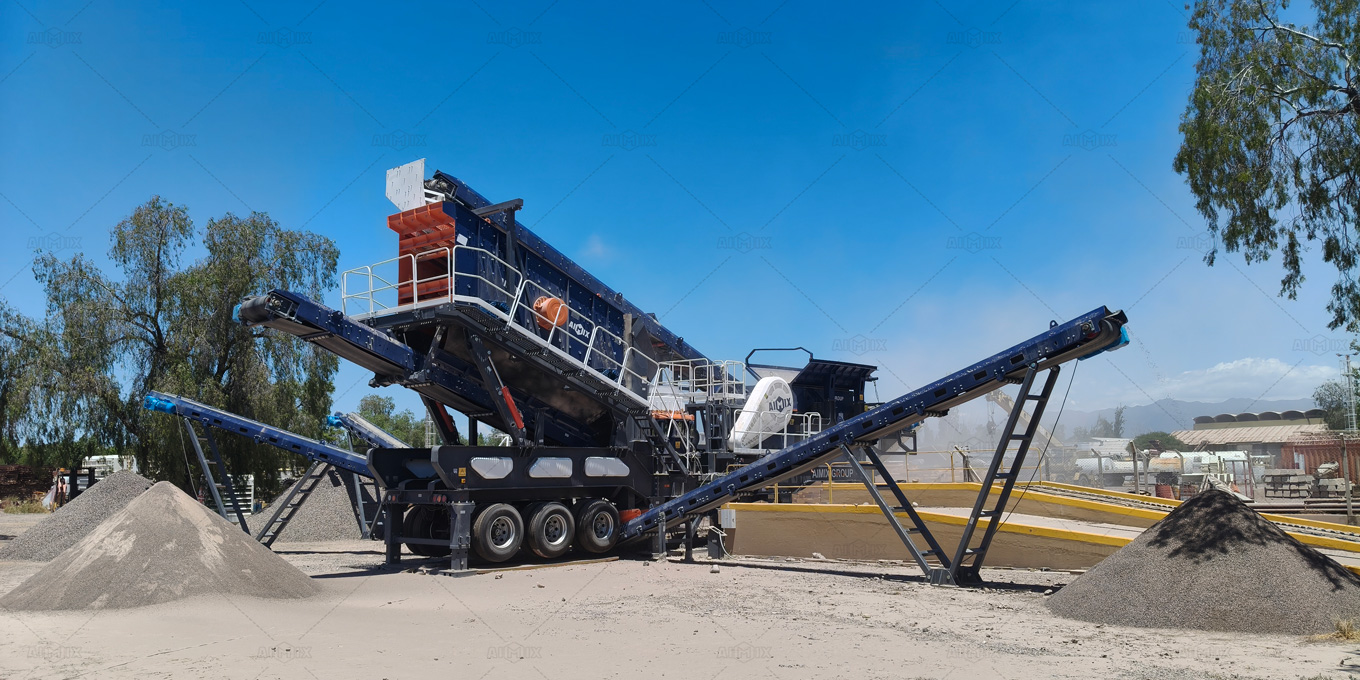
Let’s dissect a workflow that’s been quietly inefficient for decades. You quarry granite. You haul it to a separate crushing facility. You stockpile the graded aggregate. You then truck it to a concrete batching plant. That’s four distinct handoffs, each bleeding time, fuel, and margin. Now imagine collapsing those steps into a single, synchronized motion. A mobile granite crusher machine positioned directly at the quarry face doesn’t just crush rock—it re-engineers your operational logic. This isn’t speculative. It’s arithmetic. We’re analyzing how integrating primary crushing with downstream batching transforms procurement cycles, material traceability, and cost-per-ton metrics. The data suggests a paradigm worth adopting.
1. The Fragmented Baseline: Why Separate Operations Bleed Value
Traditional workflows segregate crushing from batching due to legacy equipment constraints. Quarries ship run-of-face material to standalone crushers, often operated by third-party contractors. This introduces three measurable inefficiencies: double-handling surcharges, quality variance between crusher calibration cycles, and scheduling conflicts when crusher availability misaligns with batching demand. A mid-sized operation moving 50,000 tons monthly loses approximately 8-12% of aggregate value to these friction points.
1.1 The Logistics Gap Penalty
Every ton transferred from quarry stockpile to crusher feed hopper incurs loader time, truck cycles, and road maintenance. Crushed material then undergoes secondary haulage to the batching yard. Two logistics events instead of one. Field telematics from 2024 show each transfer adds $2.40-$3.10 per ton in variable costs. A mobile crusher collocated with the batching plant eliminates the first transfer entirely—crushing directly into the plant’s surge bin.
1.2 Specification Drift as a Hidden Tax
Standalone crushers recalibrate weekly at best. Between calibrations, gradation drifts. One day’s output might overshoot the concrete plant’s specified 19mm nominal max aggregate; the next day’s might fall short. Rejected loads or adjusted mix designs absorb that variance. The cost manifests as cement overuse (finer aggregates demand higher paste volume) or as structural rework. An integrated crusher-batching system maintains real-time gradation feedback, holding specification tolerance continuously.
2. The Integrated Node: Crushing as a Batching Subroutine
Position a mobile jaw crusher or cone crusher as a peripheral device to your batching plant. Feed it directly from the quarry’s primary blast pile via a short overland conveyor. The crusher discharges onto a mobile sizing screen, then into a dedicated aggregate bin feeding the batch plant’s weigh hopper. This topology transforms crushing from a discrete project phase into a continuous sub-process.
2.1 Variable Frequency on Crusher Throughput
Batch plants demand aggregate in surges—high flow during mixing cycles, zero during discharge. A crusher operating independently ignores this duty cycle, producing constant flow that either starves or floods the batching sequence. Modern crushers with VFD-controlled feeders modulate throughput. When the batching plant signals low bin level, the crusher accelerates. When bins approach full capacity, it idles. This variable-speed coordination prevents both underfeeding (halting production) and overfeeding (plugging transfer chutes).
2.2 Reclaiming Reject Streams
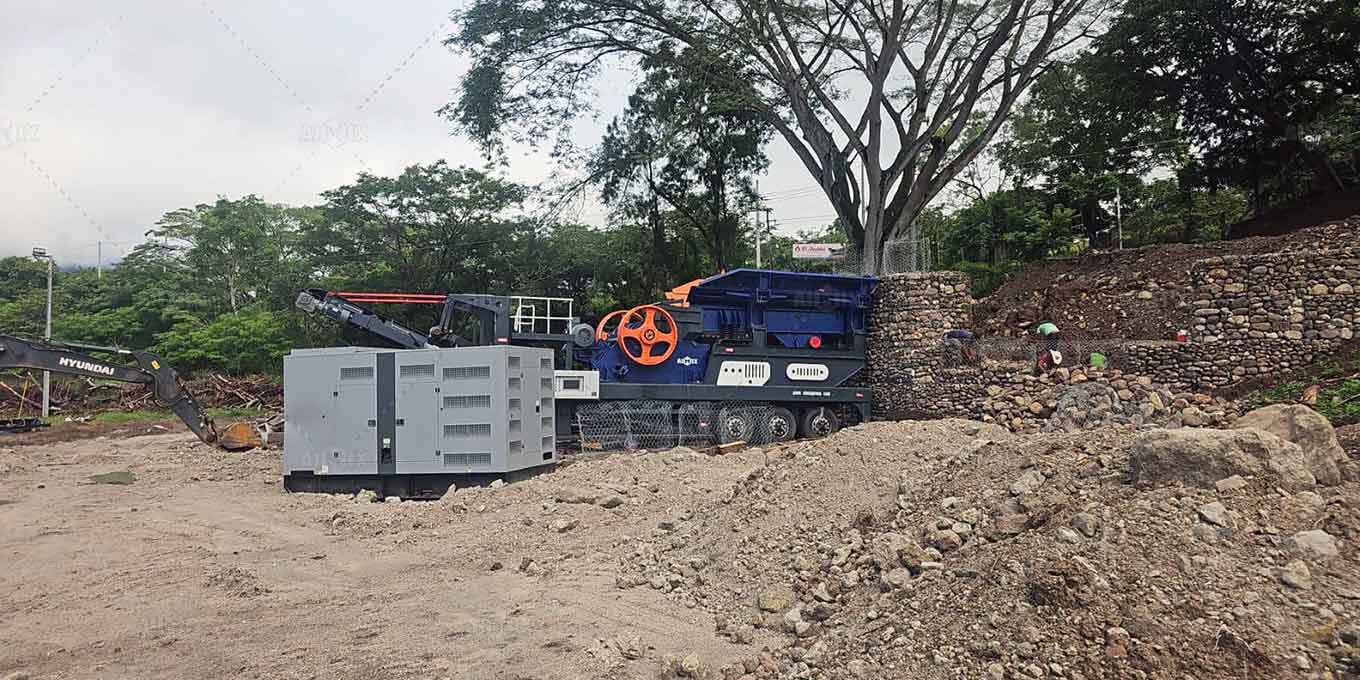
Concrete plants generate three waste streams: returned unused concrete (often washed into a reclaimer), crusher dust (ultrafines from aggregate production), and off-spec aggregate from screen overflows. An integrated granite crusher reprocesses these streams back into the feed loop. Crusher dust can be pelletized with a disc granulator and introduced as manufactured sand. Returned concrete, after jaw crushing to liberate aggregate from cement paste, re-enters the wash circuit. This circularity reduces virgin material consumption by 15-18% based on pilot studies.
3. Workflow Metadata: Telematics and Predictive Logistics
The integration of crushing and bating generates telemetric data that standalone setups miss. Granite hardness varies across the quarry face. When the stone crusher machine monitors power draw, hydraulic pressure, and wear profile in real time, it infers orebody changes before they impact downstream quality.
3.1 Proactive Wear Compensation
Manganese jaw dies wear non-uniformly—faster at the feed zone, slower at the discharge. Uneven wear alters the chamber geometry, coarsening output gradation. Integrated systems track hours-per-ton and adjust the closed-side setting automatically, compensating for wear on each cycle. This prevents the gradual coarsening that forces concrete producers to increase cement factor. The data narrative is clear: wear compensation preserves gradation, gradation preserves mix economy.
3.2 Haul Cycle Synchronization
The integrated workflow reveals that dump truck haul cycles from quarry to crusher follow predictable distributions. By modeling arrival intervals, the crusher’s feed hopper can temporarily surge to accept a three-truck conga line, then slow to process a twenty-minute gap. This absorption of haul variance prevents the queuing that burns truck idle fuel. Analytics from Jordanian granite operations demonstrated a 22% reduction in haul truck fuel consumption after implementing synchronized crushing-batching workflows.
The Efficiency Matrix: Calculating Your Shift
Transitioning to an integrated granite crusher-batching system involves upfront capital—mobile crushers, transfer conveyors, bin level sensors. The recoupment horizon typically spans 8-14 months for operations processing 30,000+ tons monthly. Beyond breakeven, the margin expansion derives from three factors: eliminated double-handling logistics, reduced cement factor due to consistent gradation, and revenue from reclaimed reject streams. Quarry-to-concrete integration isn’t merely equipment adjacency. It’s a supply chain optimization thesis. The data supports adoption.