When winter temperatures drop below 0°C (32°F), regular operations in shipyards and marinas are directly affected by the cold environment. Mobile boat hoists (commonly known as boat travel lifts) are critical marina boat handling equipment for vessels. Their hydraulic systems, power units, electrical components, and lifting slings are highly susceptible to reduced performance and increased wear at low temperatures. To reduce equipment failure rates and extend service life, implementing a systematic marine travel lift maintenance program before and during the winter season is a highly recommended industry practice. This article describes practical preventive maintenance steps in five key areas: hydraulics, engine setups, electrical enclosures, hoisting mechanisms, and ground travel safety.
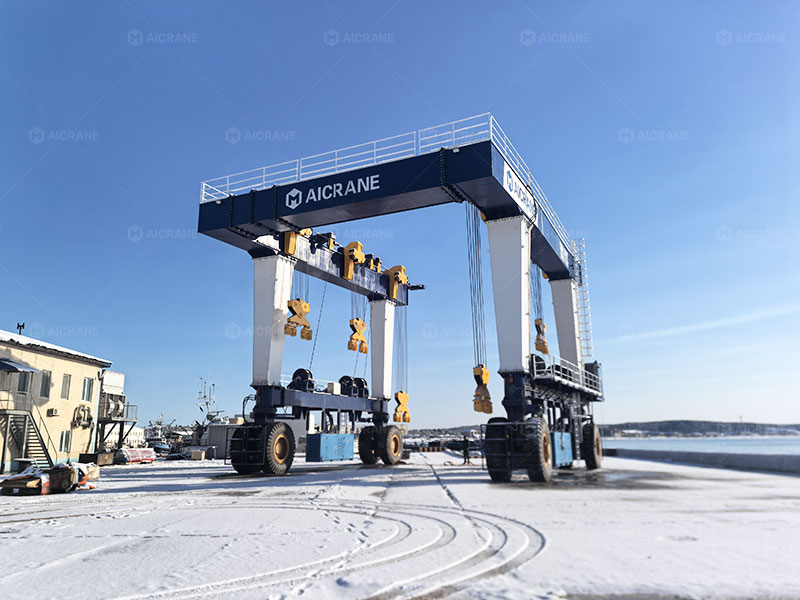
1. Hydraulic System Maintenance and Fluid Selection
Low temperatures directly affect the physical properties of hydraulic oil, leading to increased viscosity, which in turn reduces system operating efficiency and affects the lifespans of your boat travel lift parts.
- Selecting Low-Temperature Hydraulic Oil: Standard hydraulic oils (such as ISO VG 46 or 68) thicken significantly in freezing temperatures, which can cause suction difficulties for the hydraulic pump and potential wear on the pump body. In regions where temperatures regularly fall below 0°C, it is advisable to replace the fluid with a low-pour-point, low-temperature hydraulic oil (such as ISO VG 32 HV or HS grade). These specialized fluids maintain proper flow characteristics at temperatures down to -30°C or lower.
- Performing No-Load Warm-Up: It is not recommended to lift heavy loads immediately after starting the equipment in cold weather. A better operating procedure is to let the engine run at idle and cycle the hydraulic cylinders and steering mechanisms back and forth under no load for 15 to 20 minutes. This allows the oil in the system to warm up evenly and circulate fully.
- Installing Reservoir Heaters: For heavy-duty industrial marine hoists operating continuously in very cold climates, installing a thermostatic electric heater on the hydraulic reservoir is a helpful auxiliary measure. This helps maintain the oil temperature within an acceptable range prior to startup.
- Inspecting Rubber Seals: Cold temperatures can cause rubber O-rings and oil seals to harden and shrink, which reduces their sealing effectiveness. Maintenance personnel should regularly check for oil weepage around the chrome rods of the hydraulic cylinders and replace worn seals with low-temperature rated fluoroelastomer (Viton) or silicone seals if necessary.
2. Engine and Fuel System Winter Preparation
Diesel engines require specific fuel grades and coolant configurations during low-temperature startup and operation to prevent unexpected downtime.
- Using Winter-Grade Diesel and Anti-Gel Additives: Paraffin wax contained in diesel fuel can crystallize at low temperatures, which can clog the fuel filters. Before the onset of cold weather, it is advisable to switch to winter-grade diesel (such as No. 1-D or winterized No. 2-D) appropriate for local temperatures, or use qualified anti-gel additives in the fuel tank to ensure reliable diesel engine cold starts.
- Checking Coolant Freezing Point: Maintenance staff should use a refractometer to measure the concentration of the engine coolant (antifreeze). Ensure that its freezing point is at least 5°C lower than the lowest expected local temperature to prevent the cooling system from freezing and cracking the internal passages.
- Battery Maintenance and Insulation: The discharge capacity of lead-acid batteries decreases significantly as temperatures drop. In winter, ensure the batteries are fully charged and check the terminals for oxidation. If the equipment is to be left unused outdoors for an extended period, it is recommended to remove the batteries and store them in a warmer indoor environment, or install specialized thermal blankets around them.
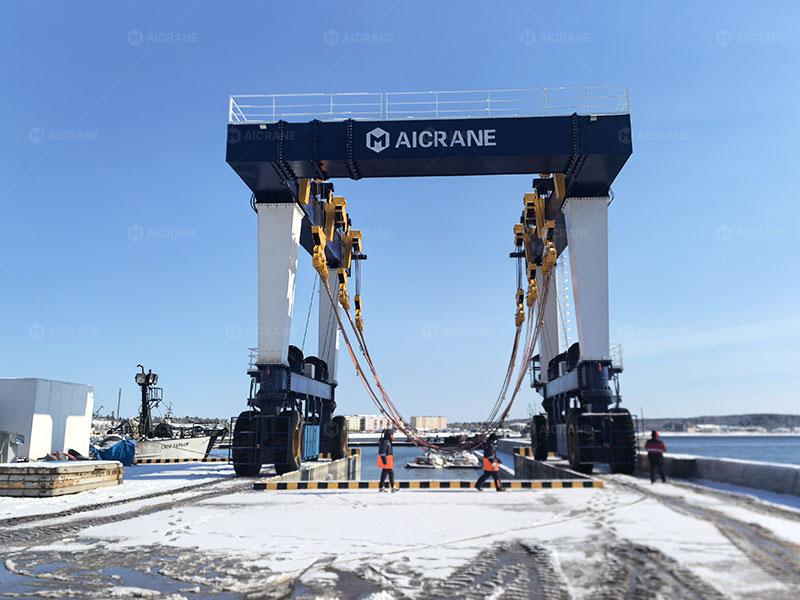
3. Preventing Moisture and Condensation in Electrical Cabinets
The large temperature difference between day and night during winter can lead to condensation inside sealed enclosures, which poses a risk to the reliable operation of delicate marine boat hoist electrical components.
- Enabling Anti-Condensation Heaters: Most travel lifts are equipped with space heaters inside the electrical control cabinets. During the cold season, make sure these heating elements are functioning properly to keep the internal temperature of the cabinet above the dew point of the outside air, thereby reducing condensation.
- Inspecting Cabinet Door Gaskets: If the rubber gaskets on the cabinet doors become degraded or deformed, wind, snow, and moisture can enter the enclosure. Regularly inspect the integrity of the gaskets and replace any damaged sections in a timely manner to avoid costly boat hoist troubleshooting later.
4. Hoisting Mechanisms: Wire Ropes, Sheaves, and Slings
The hoisting assemblies directly support the weight of the vessels and require extra attention under freezing and snowy conditions to ensure ultimate safety.
- Using Low-Temperature Wire Rope Lubricant: Standard thick grease can harden in cold temperatures, which restricts the relative movement between individual wire strands and increases internal wear. It is recommended to use a high-penetration, low-temperature marine wire rope lubrication to protect the core from moisture and salt spray.
- Clearing Ice and Snow from Sheaves and Limit Switches: Ice in the sheave grooves can cause the wire rope to slide or jump out of the groove. Before starting any lifting operation, operators should visually inspect and clear snow and ice accumulations from the sheaves, drums, and safety limit switches to ensure all rotating parts turn freely.
- Drying and Storing Webbing Slings:
Polyester or nylon slings that absorb water and freeze will harden, which can reduce their load-carrying capacity and tensile strength. After use, it is not recommended to leave high-tonnage boat lift slings, such as those engineered for 100 ton, 200 ton, or 500 ton travel lifts, on the ground or submerged in wet areas, as freezing water can degrade the material and compromise their certified lifting capacity. To protect these critical components and preserve their original tonnage ratings, slings should be hung up to dry and stored in a dry, weather-protected warehouse.
5. Runway Maintenance and Slip Prevention
Due to the high self-weight of boat travel lifts, driving on icy or snow-covered dock surfaces and launch ramps can lead to traction loss.
- Clearing Runways: Accumulations of snow and ice along the travel paths and launch ramps should be cleared promptly. Maintaining proper boat launch ramp safety by applying sand or non-corrosive de-icing agents to the concrete slipways is a practical way to improve tire traction.
- Monitoring Tire Pressure: Tire pressure decreases as the ambient temperature drops. Under-inflated pneumatic tires are prone to excessive deformation. Maintenance personnel should check tire pressures regularly and adjust them to the winter cold inflation pressure specified in the operator’s manual.
- Smooth Operation and Steer Controls: When driving on slippery ground, operators should maintain low travel speeds and avoid sudden braking. When executing multi-wheel steering maneuvers, it is advisable to use slower steering inputs and gradual angles, which helps reduce the lateral sliding of tires and minimizes unnecessary torsional stress on the metal structure of the shipyard crane.
Conclusion
Winterizing a boat travel lift is a practical preventive maintenance process rather than a reaction to component failures. By selecting appropriate low-temperature lubricants, keeping fuel and electrical systems free of moisture, protecting rigging from freezing water, and maintaining safe travel paths, shipyard operators can manage seasonal risks effectively. Taking these steps helps ensure that the equipment remains reliable and ready for operation whenever vessel lifting is required throughout the winter months.