A 30 ton gantry crane should be selected based on the maximum actual lifting load, not simply the nominal weight of the equipment or material being handled. The required capacity margin depends on load weight, lifting accessories, load distribution, operating frequency, duty classification, and potential future requirements.
For a crane handling loads up to 30 tons, a 30 ton rated capacity may be sufficient if 30 tons already represents the maximum total suspended load and the crane is properly engineered for the application. However, if the 30 ton figure excludes lifting beams, slings, spreader bars, or other accessories, a higher rated capacity may be necessary. A 35 ton or 40 ton crane may be considered when justified by the actual lifting requirements, but there is no universal percentage that applies to every project.
The correct approach is to calculate the maximum design lifting load first, then select a crane with an appropriate rated capacity and structural design.
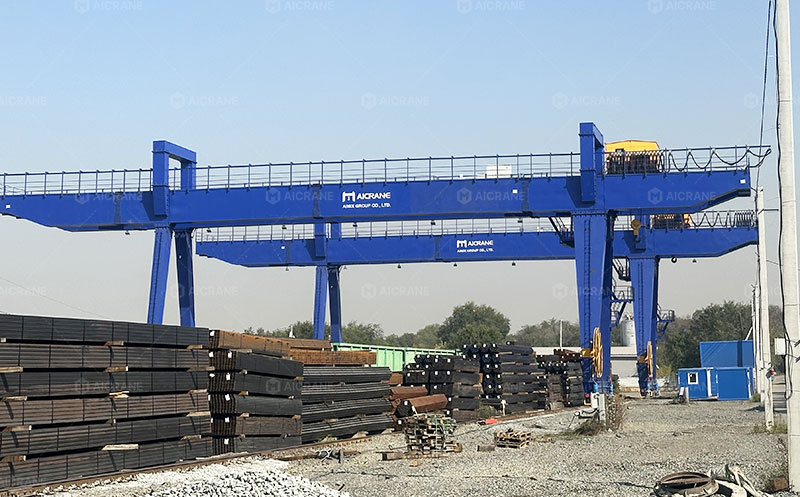
1. What Does Capacity Margin Mean for a 30 Ton Gantry Crane?
Capacity margin is the difference between a crane’s rated lifting capacity and the maximum load it is expected to handle.
For example, if a gantry crane has a rated capacity of 30 tons and regularly lifts loads weighing 25 tons, the nominal capacity margin is 5 tons.
The capacity margin can be calculated as:
Capacity Margin = Rated Crane Capacity − Maximum Total Suspended Load
Capacity Margin (%) = (Capacity Margin / Maximum Total Suspended Load) × 100%
Consider three possible configurations:
- A 30 ton crane lifting 25 tons has a 5 ton margin, or 20%.
- A 30 ton crane lifting 28 tons has a 2 ton margin, or approximately 7.1%.
- A 40 ton crane lifting 30 tons has a 10 ton margin, or approximately 33.3%.
These figures describe the difference between rated capacity and working load. They are not structural safety factors.
This distinction is important because crane structural safety factors, design load combinations, dynamic effects, and rated capacity are governed by applicable engineering standards. A larger nominal capacity margin does not replace proper structural calculations.
2. How Much Capacity Margin Should a 30 Ton Gantry Crane Have?
There is no fixed capacity margin that every 30 ton gantry crane must have. The appropriate rated capacity depends on whether the maximum load includes all lifting accessories and whether additional operating or future requirements exist.
Three common situations help explain the selection process.
Scenario 1: Maximum Load Is Below 30 Tons
If the heaviest suspended load is 25 tons, a 30 ton gantry crane may be appropriate.
This configuration provides a 5 ton nominal margin, assuming:
- The 25 ton figure includes all suspended lifting accessories.
- The load is lifted within the crane’s rated operating conditions.
- The hoist, trolley, bridge, legs, and supporting structure are designed for the required duty.
- The lifting arrangement does not introduce unaccounted loads or unfavorable loading conditions.
For a facility with stable lifting requirements, there may be no engineering reason to purchase a larger crane.
Scenario 2: The Maximum Load Is Close to 30 Tons
If the actual load reaches 28–30 tons, the selection requires closer attention.
A nominal 30 ton crane may still be suitable if the complete suspended load remains within its rated capacity and all operating conditions comply with the design requirements.
However, buyers should check whether the quoted load weight includes lifting beams, slings, hooks, and other accessories.
For example, a 28 ton steel structure lifted with a 2 ton spreader beam creates a total suspended load of 30 tons, before accounting for any other accessories not included in the stated weight.
In this case, the lifting system must be evaluated as a complete assembly. Selecting a 30 ton crane based only on the steel structure’s weight could result in an undersized lifting system.
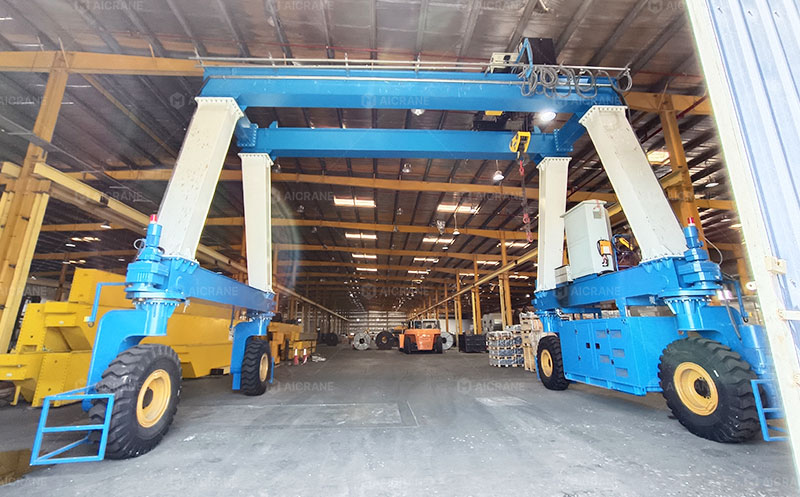
Scenario 3: Future Loads May Exceed 30 Tons
If production plans indicate that loads may increase to 35 or 40 tons, selecting a larger crane during the initial project may be more economical than replacing the equipment later.
A 40 ton gantry crane could be considered when:
- Larger workpieces are expected in future production.
- Multiple components may need to be lifted together.
- New production lines will introduce heavier equipment.
- The facility expects changes in material dimensions or handling methods.
However, future capacity should be based on realistic production plans rather than an arbitrary percentage added to the current requirement.
3. What Factors Determine the Required Capacity Margin?
The rated capacity of a 30 ton gantry crane should reflect the complete lifting operation. Several factors directly influence the required capacity.
3.1 Actual Load Weight
The first step is identifying the heaviest load the crane will lift.
This information should come from engineering drawings, equipment specifications, material records, or verified weighing data.
Buyers should distinguish between:
- Individual component weight.
- Complete assembly weight.
- Maximum load during maintenance or installation.
- Combined weight of multiple components lifted simultaneously.
For example, a manufacturing facility may normally handle 20 ton components but occasionally need to lift a 28 ton assembled machine.
The crane must be selected for the maximum permitted lifting requirement, not the average operating load.
3.2 Weight of Lifting Accessories
Lifting accessories are frequently overlooked during gantry crane capacity selection.
The total suspended load may include:
- Hooks and lifting attachments.
- Slings and shackles.
- Spreader beams.
- Lifting frames.
- Vacuum lifters or specialized lifting devices.
For example:
A steel component weighs 26 tons, while the lifting beam and accessories weigh another 2.5 tons.
Total suspended load = 26 + 2.5 = 28.5 tons.
A 30 ton crane may have sufficient nominal capacity for this arrangement, provided no additional loads or restrictions apply.
The accessory weight should be confirmed from actual equipment specifications rather than estimated without verification.
3.3 Load Distribution and Lifting Points
The load’s weight is not the only consideration. Its distribution across the lifting points also affects the design of the lifting arrangement.
An unevenly distributed load can create different forces at individual lifting points.
For example, a long steel structure with an offset center of gravity may place more load on one side of the lifting system.
The lifting beam, slings, hoist arrangement, and crane structure must be evaluated for the resulting forces.
For a double girder gantry crane, the distribution of trolley wheel loads and the position of the trolley also affect the structural design.
A crane rated at 30 tons is not automatically suitable for every 30 ton load configuration.
3.4 Operating Frequency and Duty Classification
A crane handling 30 ton loads several times per day has different operating requirements from one that performs occasional heavy lifts.
Important operating factors include:
- Number of lifting cycles per hour or shift.
- Average and maximum load levels.
- Hoisting and travelling speeds.
- Acceleration and deceleration.
- Required working hours.
- Expected service life.
Crane duty classifications under standards such as FEM and ISO help determine the appropriate mechanical and structural design.
A higher duty classification may require more robust components, such as hoisting mechanisms, motors, brakes, gearboxes, wheels, and structural elements.
For example, a 30 ton crane used for occasional equipment installation may have different duty requirements from a crane used continuously in a steel fabrication workshop.
A higher duty classification does not automatically mean a higher rated lifting capacity. Capacity and duty classification are separate selection parameters.
3.5 Dynamic Effects During Lifting
During crane operation, loads can be affected by acceleration, braking, hoisting movements, and other dynamic effects.
These effects influence the forces acting on the crane structure and mechanical systems.
Relevant considerations include:
- Hoisting acceleration and deceleration.
- Trolley and crane travelling movements.
- Sudden changes in operating conditions.
- Load swing.
- Potential impact or snagging during lifting.
Dynamic effects should be addressed through the applicable crane design standards and engineering calculations.
Operators should never use additional nominal capacity as permission to lift a load that exceeds the crane’s rated capacity.
4. Should You Choose a 30 Ton, 35 Ton, or 40 Ton Gantry Crane?
The choice between a 30 ton, 35 ton, and 40 ton gantry crane should depend on the maximum total suspended load and expected future requirements.
The following examples illustrate how buyers can approach the decision.
30 Ton Gantry Crane
A 30 ton gantry crane is suitable for applications where the maximum permitted suspended load does not exceed 30 tons.
Typical applications may include:
- Handling medium-to-heavy steel structures.
- Moving precast concrete components.
- Loading and unloading industrial equipment.
- Material handling in fabrication workshops.
- Lifting machinery components during assembly.
It can be a practical option when the maximum lifting requirement is clearly defined and there is no immediate need for higher capacity.
35 Ton Gantry Crane
A 35 ton gantry crane may be considered when the maximum suspended load is above 30 tons but does not exceed 35 tons.
For example, a facility handling 30 ton components with additional lifting accessories may require a crane with a higher rated capacity.
The 35 ton option can also provide flexibility for future production changes, provided the supporting structure and operating conditions are properly designed.
40 Ton Gantry Crane
A 40 ton gantry crane is worth evaluating when future loads may approach 40 tons or when current lifting requirements already exceed 35 tons.
Potential applications include:
- Heavy steel fabrication.
- Large precast concrete production.
- Industrial equipment installation.
- Heavy machinery manufacturing.
- Large component assembly yards.
A larger rated capacity can increase equipment and infrastructure costs. It may also require stronger runway foundations, rails, supporting structures, and electrical systems.
The decision should therefore consider the total project cost rather than crane purchase price alone.
5. Does a Larger Capacity Margin Increase Gantry Crane Safety?
A larger capacity margin can provide additional operating flexibility, but it does not automatically make a gantry crane safer.
Crane safety depends on the complete engineering design, including:
- Structural strength and stability.
- Hoisting mechanism capacity.
- Brake performance.
- Trolley and wheel loads.
- Leg and beam strength.
- Foundation and ground-bearing conditions.
- Wind resistance and anti-derailment protection.
- Electrical and control systems.
- Overload protection and limit switches.
For example, a 40 ton gantry crane operating on an inadequately designed foundation may present greater risks than a properly engineered 30 ton crane.
Similarly, increasing the rated capacity can increase the wheel loads transferred to the rails and foundations. The supporting structure must be checked for these increased loads.
A crane’s rated capacity must be established through engineering design and verification. It should never be increased simply by assuming that the existing structure has enough spare strength.
6. How Do Span and Lifting Height Affect the Selection of a 30 Ton Gantry Crane?
Rated capacity is only one part of gantry crane selection. Span and lifting height also influence structural design and project cost.
Span
Span refers to the horizontal distance between the gantry crane’s supporting legs or rail centerlines, depending on the crane configuration.
A wider span generally increases the structural demands on the main girder.
For example, a 30 ton gantry crane with a 20 m span may require a different girder configuration from a crane with a 30 m span.
Even though both cranes have the same rated capacity, their structural dimensions, weight, wheel loads, and manufacturing requirements may differ.
Lifting Height
Lifting height determines how far the hook must travel vertically to handle the load.
A higher lifting requirement can affect:
- Main girder elevation.
- Gantry leg dimensions.
- Hoist configuration.
- Structural stability.
- Overall crane height.
For outdoor applications, lifting height should also account for the dimensions of the load, lifting accessories, and required clearance.
Buyers should provide the actual lifting height requirement rather than only specifying the height of the facility.
Crane Configuration
A 30 ton gantry crane may use a single girder or double girder structure, depending on the span, lifting height, duty requirements, and application.
A double girder gantry crane is often considered for demanding heavy-duty applications where greater structural rigidity, higher lifting heights, or particular trolley arrangements are required.
The final configuration should be determined by engineering calculations rather than rated capacity alone.
7. What Information Should Buyers Provide When Requesting a 30 Ton Gantry Crane?
To determine the appropriate capacity margin, buyers should provide more than the nominal lifting capacity.
The following information helps manufacturers evaluate the actual requirements.
1. Maximum load weight
Specify the heaviest component or assembly to be lifted, including whether lifting accessories are included.
2. Lifting accessories
Provide the weight and configuration of spreader beams, lifting frames, slings, and other attachments.
3. Span
Specify the required distance between the supporting rails or legs.
4. Lifting height
Indicate the required hook lifting height and available headroom.
5. Working duty
Describe the number of lifting cycles, operating hours per day, and typical load conditions.
6. Working environment
Identify whether the crane will operate indoors or outdoors, along with relevant wind, temperature, dust, and corrosion conditions.
7. Future lifting requirements
Explain whether heavier loads or changes in production are expected during the crane’s service life.
8. Supporting conditions
Provide information about rail foundations, ground conditions, existing supporting structures, and available installation space.
With these details, the manufacturer can evaluate the rated capacity, crane configuration, structural design, and supporting infrastructure together.
8. Common Mistakes When Selecting the Capacity of a 30 Ton Gantry Crane
Several selection mistakes can lead to unnecessary costs or unsuitable lifting equipment.
Selecting capacity based only on the product weight
The weight of the component may not represent the complete suspended load. Lifting accessories and attachments must also be considered.
Adding an arbitrary 10% or 20% margin
A fixed percentage is not a substitute for calculating actual lifting requirements. Capacity selection should follow the applicable design standards and operating conditions.
Ignoring future production changes
A crane designed only for current loads may become unsuitable when heavier components are introduced. Future requirements should be evaluated before equipment procurement.
Focusing only on rated capacity
Span, lifting height, duty classification, operating environment, and foundation conditions can significantly affect crane suitability.
Assuming a higher-capacity crane is always better
A larger crane can increase structural weight, wheel loads, foundation requirements, and overall project costs. Additional capacity should have a clear engineering or operational justification.
9. Frequently Asked Questions
Is a 30 ton gantry crane enough to lift a 30 ton load?
Yes, it can be sufficient if the total suspended load, including lifting accessories, does not exceed the rated capacity and the lifting arrangement complies with the crane’s design and operating requirements. The load distribution and lifting configuration must also be verified.
Should I choose a 35 ton gantry crane for a 30 ton load?
Not automatically. A 35 ton crane may be appropriate if the actual suspended load exceeds 30 tons or if future lifting requirements justify the additional capacity. If the complete suspended load is within 30 tons, a properly engineered 30 ton crane may be sufficient.
Does a 30 ton crane have a 30 ton safety margin?
No. A 30 ton rated capacity means the crane is designed to lift a maximum rated load of 30 tons under specified conditions. It does not mean the crane has an additional 30 tons of allowable capacity.
What is the difference between rated capacity and safe working load?
Rated capacity is the maximum load a crane is designed and approved to lift under its specified operating conditions. Safe working load is commonly used to describe the allowable working load for lifting equipment or a lifting configuration. The exact terminology depends on the applicable standard and equipment documentation.
Can a 30 ton gantry crane lift 35 tons occasionally?
No. A crane must not lift a load above its rated capacity simply because the lift is occasional. If a 35 ton lift is required, the crane must have an appropriately rated and engineered lifting capacity for that operation.
Is a double girder gantry crane necessary for 30 tons?
Not in every case. Both single girder and double girder configurations may be considered, depending on span, lifting height, duty classification, structural requirements, and application. A manufacturer should evaluate the complete operating conditions before recommending a configuration.
Conclusion
The appropriate capacity margin for a 30 ton gantry crane depends on the maximum total suspended load, lifting accessories, operating duty, load distribution, and future production requirements.
A 30 ton crane can be sufficient when the complete lifting load stays within its rated capacity. A 35 ton or 40 ton model may be more appropriate when actual or planned lifting requirements exceed 30 tons.
The key is to avoid selecting capacity based on an arbitrary percentage. Calculate the maximum suspended load, evaluate the operating conditions, and verify the structural and mechanical design before finalizing the crane specification.
For industrial buyers, this approach helps balance lifting capability, operational flexibility, structural safety, and total project investment.