For property developers in Kenya, the decision to purchase concrete equipment or outsource concrete placement can affect construction schedules, labor coordination, concrete quality, and project margins. The right choice depends less on the initial purchase concrete mixer with pump price than on how frequently concrete is needed, how much volume each project requires, and whether several sites will operate simultaneously. A developer building apartments in Nairobi faces different operational demands from one constructing residential houses in Nakuru or commercial properties in Mombasa. A concrete mixer pump combines concrete mixing and pumping in one machine, making it worth evaluating when projects require regular concrete supply but cannot justify a large batching plant and separate pumping equipment.
Neither ownership nor outsourcing is universally superior. Developers should compare the total cost of operating their own equipment against the full cost of outsourced concrete placement, including transport, labor coordination, scheduling constraints, and potential delays. This comparison becomes especially important for developers managing multiple projects or working in locations where ready-mixed concrete delivery and pumping services may be difficult to coordinate.
1. Compare the Real Costs of Equipment Ownership and Outsourced Concrete Placement
What Does Owning a Concrete Mixer Pump Actually Cost?
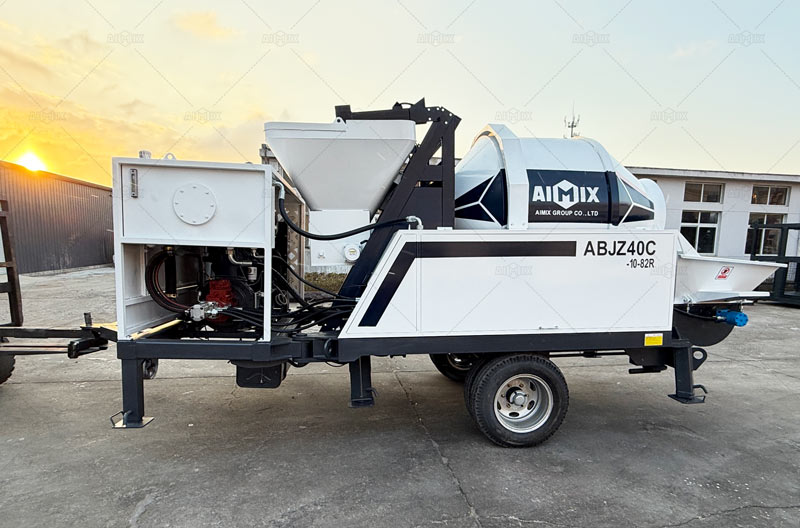
Purchasing a concrete mixer pump involves more than paying the supplier. The total investment includes the machine, transportation to the project site, operator training, fuel or electricity where applicable, routine maintenance, spare parts, and eventual component replacement. Developers should also account for the time required to arrange equipment storage, mobilization, and servicing between projects.
The investment of a concrete mixer pump becomes easier to justify when the machine can remain productive across a sustained pipeline of construction work. For example, a developer building several apartment blocks may use the equipment for foundations, columns, beams, slabs, and other concrete structures over an extended period. Instead of repeatedly arranging external mixing and pumping services, the construction team can coordinate concrete production and placement around its own schedule.
However, ownership can become a financial burden when the equipment sits idle for months. A machine purchased for one short project may generate insufficient savings to compensate for depreciation, maintenance, financing costs, and operator wages. The relevant question is therefore not simply whether the developer can afford to buy a machine, but whether the expected utilization rate supports the investment.
How Should Developers Evaluate the Cost of Outsourcing?
Outsourcing reduces the need for a large upfront capital commitment. Developers pay for the services required by a particular project instead of assuming responsibility for equipment ownership, maintenance, and storage. This arrangement can be attractive for one-off developments, small projects, or construction businesses with an irregular workload.
Nevertheless, the quoted service fee rarely tells the whole story. The complete cost may include concrete supply, pumping charges, transportation, minimum booking periods, mobilization, waiting time, and additional charges when site access or scheduling causes delays. If a concrete pump supplier cannot deliver at the required time, the developer may also face idle labor, postponed work, or disruption to follow-on trades.
For a fair comparison, calculate the total cost per cubic meter of concrete successfully placed, rather than comparing the purchase price of a machine with a contractor’s hourly rate. Include the costs of concrete materials in both scenarios, so the comparison remains consistent.
2. Match the Equipment Decision to Project Size, Site Conditions, and Workload
When Does a Concrete Mixer Pump in Kenya Make Sense?
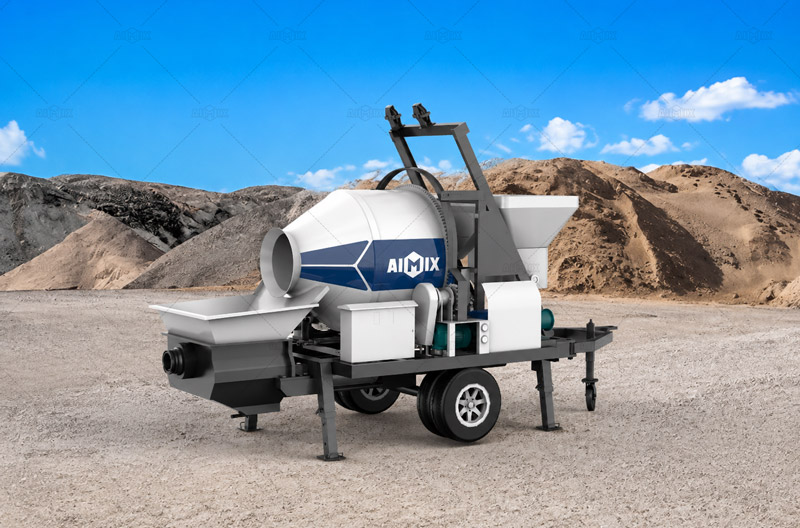
A concrete mixer pump in Kenya can suit developers who need to mix and deliver concrete on site, particularly where a separate batching plant and pumping unit would be excessive for the project’s scale. Its integrated arrangement can reduce equipment coordination and provide a more direct route from concrete preparation to placement.
Consider a developer constructing several low- to mid-rise residential buildings. If concrete work occurs regularly across foundations, ground beams, columns, and floor slabs, owning a suitable machine may provide greater control over the sequence of operations. The benefit is particularly relevant when concrete demand varies throughout the day or when the site cannot accommodate several large machines.
Site access also matters. Urban plots in Nairobi may have limited space for equipment maneuvering, concrete delivery vehicles, and material storage. Projects on the outskirts of growing towns may have different constraints, including longer travel distances for external suppliers. A mixer pump can help consolidate mixing and pumping operations, but developers must still verify access routes, aggregate storage, water availability, pipeline layout, and the machine’s actual pumping capacity.
When Is a Small Concrete Pump Mixer in Kenya the Better Fit?
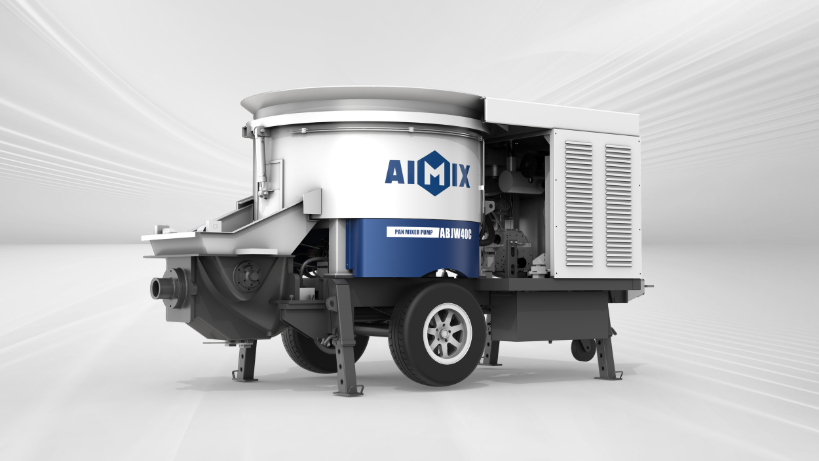
A small concrete pump Kenya option may be appropriate for developers constructing individual houses, small apartment blocks, extensions, boundary walls, or other projects with moderate concrete requirements. Its compact configuration can be useful where space is restricted and the project does not need the throughput of a large commercial concrete plant.
Yet smaller equipment should not be selected solely because it costs less. The machine must match the required concrete output, pumping distance, vertical delivery height, mix characteristics, and daily construction schedule. A unit that cannot keep pace with the planned pour may create interruptions that undermine the savings from purchasing a smaller model.
Developers should also distinguish rated output from practical site production. Actual output depends on the concrete mix, operator proficiency, pipeline configuration, material handling, and the continuity of aggregate, cement, and water supply. Before purchasing, request technical specifications and discuss the expected working conditions with the manufacturer. Where possible, assess performance against the largest routine pour rather than an average day.
How Does the Concrete Mixer Pump Price in Kenya Affect the Decision?
The concrete mixer pump price in Kenya varies with machine capacity, configuration, power system, pumping performance, component specifications, and supplier terms. Imported equipment may also involve freight, insurance, customs-related charges, inland transportation, and other landed costs. Consequently, an advertised price should be treated as a starting point rather than the complete ownership budget.
Ask suppliers to clarify what the quotation includes. Check whether commissioning guidance, operator training, warranty coverage, spare parts, and after-sales technical support are included or charged separately. Confirm the recommended maintenance intervals and the availability of wear parts, particularly pumping components that require periodic replacement.
A lower purchase price does not automatically produce a lower operating cost. Conversely, a higher-priced machine may be justified if its capacity and reliability are better aligned with the developer’s workload. The sensible comparison is between complete ownership costs and the realistic cost of outsourcing equivalent concrete placement over the same period.
3. Use a Break-Even Assessment Before Making the Final Decision
Calculate the Workload Required to Justify Ownership
Developers can begin with a straightforward break-even calculation:
Break-even placed volume = Annual fixed ownership costs ÷ Net savings per cubic meter
Annual fixed ownership costs may include depreciation or financing, insurance where applicable, storage, and other expenses that continue even when the machine is idle. Net savings per cubic meter equal the comparable outsourcing cost minus the owner’s variable operating cost per cubic meter. Both figures should exclude costs that are identical under the two options.
For illustration, suppose a developer estimates annual fixed ownership costs of KSh 1,200,000 and expects to save KSh 1,500 per cubic meter after accounting for variable operating expenses. The break-even volume would be 800 cubic meters annually. These figures are hypothetical, not current market quotations; each developer should replace them with verified supplier prices and project-specific operating estimates.
If projected demand comfortably exceeds the calculated threshold, ownership deserves closer consideration. If expected volume falls below it, outsourcing may remain financially preferable. The calculation should also be tested against a conservative scenario in which project approvals are delayed, concrete demand declines, or the machine remains unused between developments.
Consider a Hybrid Approach for Multiple Projects
Some property developers do not need to choose between owning every piece of equipment and outsourcing all concrete placement. A hybrid arrangement may offer greater flexibility.
A developer could own a small concrete pump for routine foundations, columns, and moderate-volume pours while outsourcing unusually large slab pours or projects that require higher pumping capacity. This approach preserves some operational control without requiring the company to purchase equipment for its most demanding but infrequent tasks.
For developers with several active sites, equipment scheduling becomes critical. A single machine may serve multiple projects if their concrete requirements occur at different times and transportation between sites is practical. If several projects require simultaneous pours, however, outsourcing or hiring additional equipment may be necessary. The plan should account for mobilization time, cleaning, maintenance, and the risk of overlapping schedules.
Make the Decision Based on Measurable Project Demand
Before committing to ownership, property developers should review their construction pipeline for the next 12–24 months. Estimate the total concrete volume, the number of pouring days, the typical size of each pour, and the distance between sites. Then obtain comparable quotations from equipment suppliers and concrete placement contractors.
Ownership is generally more defensible when concrete work is frequent, project schedules require close control, and the machine can be utilized across several developments. Outsourcing is often more suitable when demand is intermittent, capital must remain available for land and construction, or specialist pumping capacity is needed only occasionally.
The strongest decision is the one supported by actual workload, complete operating costs, and realistic site conditions—not by the assumption that owning equipment is always cheaper. For Kenyan developers, a properly sized concrete mixer pump can become a productive construction asset, but only when its utilization matches the investment. When concrete demand is irregular or unpredictable, outsourcing may preserve flexibility and avoid tying capital to equipment that spends too much time idle.